Activewear Fit Sample Approval Checklist: 25 Points to Check Before Bulk Production
- Share
- Issue Time
- Sep 21,2026
Summary
A factory-side activewear fit sample approval checklist covering 25 points before bulk production. Review garment measurements, body fit, movement, compression, opacity, seams, construction, trims, branding, wash results, revision comments and written bulk approval so the final production standard is clear and traceable.
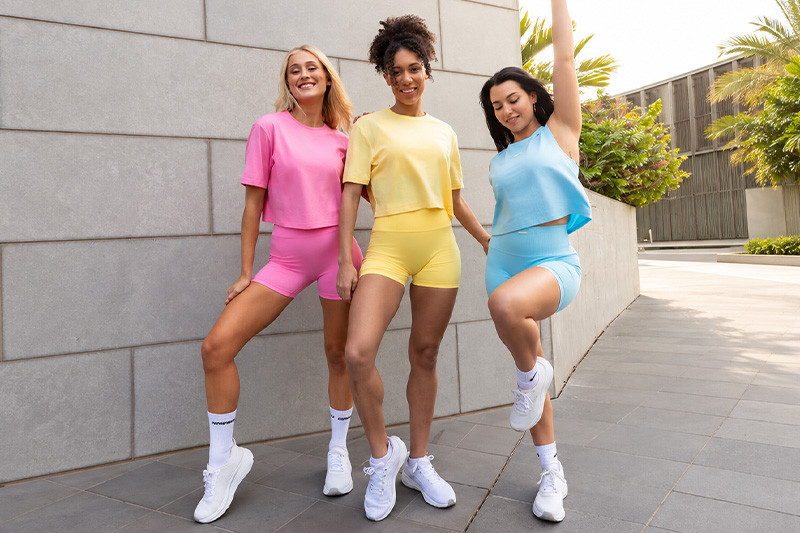
A fit sample should not be approved because someone says, “It looks good.” Before an activewear style moves into bulk production, the buyer and factory need a clear record of what was checked, what changed, what still needs correction, and exactly which sample version is approved.
This matters even more for leggings, sports bras, fitted shorts and training tops. A garment can measure within tolerance while still rolling at the waistband, pulling at the rise, becoming too sheer during a squat or restricting normal movement.
Approve an activewear fit sample against a written checklist covering measurements, actual body fit, movement, compression or support, opacity, construction, seams, trims, branding and wash results before bulk release.
Every open comment should be closed or formally accepted. The approved sample revision, fabric, color, measurement specification, artwork and relevant construction details should be traceable.
If the factory changes a material, fit, construction or critical component after approval, the affected requirement should be reviewed again instead of assuming the previous approval still applies.
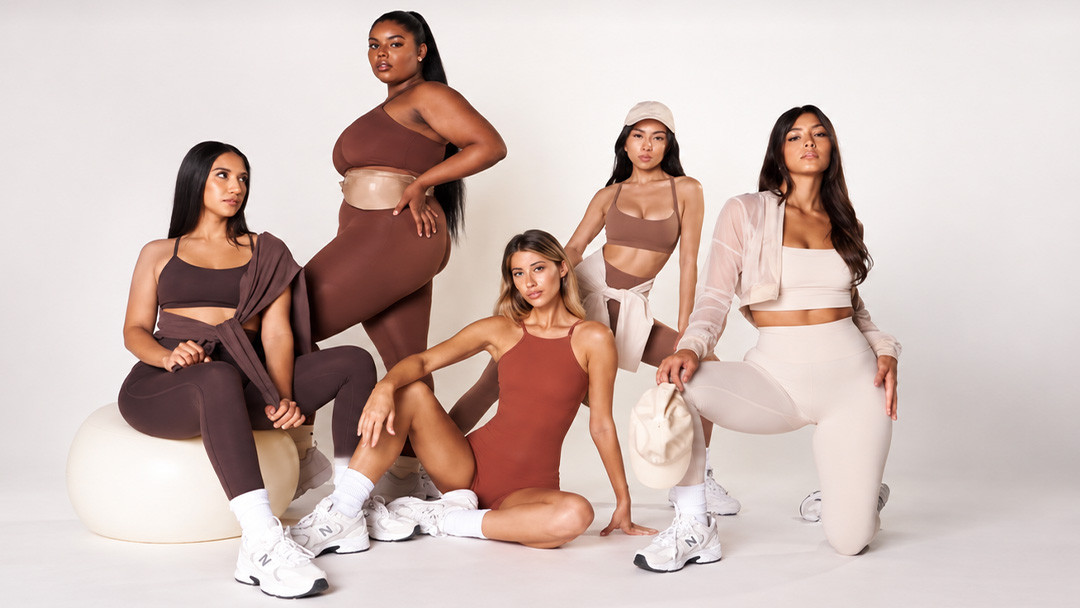
1. Why Fit Sample Approval Prevents Expensive Rework
The earlier a problem is found, the easier it usually is to correct.
A waistband that rolls on the fit sample may require a pattern, elastic or construction change. Finding that issue after the bulk cutting or sewing stage is much harder.
Common problems that should be caught before bulk include:
- Incorrect garment measurements
- Poor rise or crotch fit
- Waistband rolling or sliding
- Sports-bra underband instability
- Restricted movement
- Unexpected opacity problems
- Poor seam placement
- Incorrect logo position
- Wrong labels or trims
- Unclosed revision comments
2. Prepare the Fit Session Before You Start
A useful fit session begins before the model puts the garment on.
First confirm that everyone is reviewing the same version.
Fit-Session Preparation
- Correct style number
- Correct sample revision
- Correct sample size
- Current measurement specification
- Current tech pack
- Correct fabric or production-intent substitute
- Approved or current color
- Correct trims and elastic where required
- Current artwork / logo revision
- Suitable fit model for the target size
If the sample uses substitute fabric, temporary trims or an unfinished branding detail, record that clearly.
3. The 25-Point Activewear Fit Sample Approval Checklist
The following checklist is divided into five groups so the buyer can review the garment systematically instead of jumping randomly between fit, construction and appearance.
Group 1 — Measurements & Base Fit
Group 2 — Movement & Performance
Group 3 — Construction & Workmanship
Group 4 — Visual & Brand Details
Group 5 — Wash Review & Bulk Release
4. Measurements Can Pass While the Fit Still Fails
One of the most important lessons in activewear development is that measurement approval and fit approval are related—but they are not the same thing.
A legging can measure within tolerance and still show:
- Waistband rolling
- Front-rise tension
- Insufficient back coverage
- Crotch drag lines
- Excessive thigh compression
- Knee bagging
- Side-seam movement
Likewise, a sports bra can meet the written dimensions while the wearer experiences:
- Underband ride-up
- Poor side coverage
- Incorrect strap position
- Excessive strap pressure
- Insufficient containment during movement
5. Use Product-Specific Movement Tests
Not every activewear product needs the same movement sequence.
| Product | Useful fit movements | What to watch |
|---|---|---|
| Leggings | Squat, lunge, bend, walk | Waist stability, rise, opacity, seam strain, recovery |
| Sports bra | Arm raise, rotation, controlled bounce or training movement | Underband stability, coverage, straps, support positioning |
| Workout shorts | Squat, lunge, leg lift, run movement | Rise, leg opening, rolling, pocket security, opacity |
| Fitted training top | Arm raise, reach, torso rotation | Hem movement, armhole fit, bust/chest fit, seam position |
| Tennis / golf garment | Rotation, arm swing, bend, walking movement | Mobility, hem coverage, built-in short fit, pocket access |
6. Review Compression and Opacity Separately
A garment can feel supportive and still become too sheer. It can also remain opaque but feel excessively restrictive.
These are separate approval questions.
Compression / Support
Confirm that the garment delivers the approved fit position without unreasonable movement restriction or concentrated pressure.
Avoid converting a subjective term such as “medium compression” directly into a pressure value unless actual garment-pressure testing has been performed.
Opacity
Where opacity matters, evaluate the production-intent fabric and color under realistic garment stretch.
Light colors should not automatically inherit the approval of a black sample.
This section can link internally to your separate articles on:
- Activewear Compression Levels
- How to Test Whether Leggings Are Squat-Proof
7. Construction Approval Is More Than Checking Sewing Quality
Workmanship is important, but the buyer also needs to confirm that the factory is building the intended construction.
For example, review:
- Correct seam type by location
- Correct gusset construction
- Correct waistband layers
- Correct lining
- Correct cup construction
- Correct pocket architecture
- Correct elastic attachment
- Correct hem treatment
A beautiful seam in the wrong construction is still the wrong sample.
Inseam construction approved. Gusset seam to follow PPS V4 reference. Waistband internal elastic still incorrect—replace with approved elastic specification before bulk release.
8. Wash Review: What Should Be Checked?
If wash performance is part of the buyer requirement, the fit-sample approval process may include a before-and-after wash review.
AATCC TM150-2025 provides a method for determining length and width dimensional changes of garments after home laundering. However, AATCC notes that the method may not be applicable to garments made from certain stretch fabrics.
For stretch activewear, the buyer and supplier should therefore confirm which laundering and dimensional-change method is actually appropriate for the product.
Useful Post-Wash Review Points
- Overall garment length
- Waist / underband dimensions
- Hip / bust dimensions where applicable
- Twisting or distortion
- Seam puckering
- Elastic recovery
- Surface appearance
- Print or heat-transfer appearance
- Logo adhesion
- Fit after laundering
9. Use PASS, REVIEW and FAIL Instead of “Looks Fine”
10. Write Revision Comments So the Factory Can Act on Them
Comments such as:
Logo looks wrong.
Please improve fit.
create interpretation problems.
A useful comment explains:
- Where the problem is
- What the approved target is
- What change is required
- Which document or sample controls the correction
- Whether another physical sample is required
The goal is not to make comments sound technical. The goal is to make them difficult to misunderstand.
11. When Is a Sample Actually Ready for Bulk Release?
A sample is not ready for bulk simply because the latest fitting was better than the previous one.
Before release, confirm:
- All critical fit comments are closed
- Critical measurements are approved
- Production-intent fabric is approved
- Color approval status is clear
- Construction is approved
- Trims are approved
- Artwork and logo revision are approved
- Labels are approved
- Required wash / performance review is complete
- Approved sample revision is identified
12. Sample Version Control Matters More Than It Sounds
A surprising amount of production confusion comes from teams talking about “the approved sample” while holding different revisions.
A simple naming system helps:
FIT V2 — Second fit correction
PPS V1 — First pre-production sample
PPS V2 — Revised pre-production sample
PPS V3 — Final approved sample
Your naming system can be different. What matters is that every department can identify the same approved version.
Keep the Approval Record Together
| Approval field | Example record |
|---|---|
| Style | LG-2609 |
| Sample revision | PPS V4 |
| Approved size | M |
| Fabric | Approved production fabric code |
| Color | Approved color / lab-dip reference |
| Measurement spec | Rev. 6 |
| Artwork | Logo Artwork Rev. 3 |
| Open comments | 0 |
| Status | Approved for Bulk |
| Approval date | Record actual date |
The record above is an illustrative format only. Replace it with your actual project data and internal approval terminology.
13. Example Bulk-Release Wording
A written approval does not need to be complicated, but it should remove ambiguity.
PPS V4 is approved for bulk production.
Bulk production must follow:
• Approved PPS V4 construction and fit
• Measurement Specification Rev. 6
• Approved Fabric Code XXXXX
• Approved Color Standard / Lab Dip XXXXX
• Artwork Rev. 3
• Approved trims and labels
All fit comments from the previous revision are closed.
Any change to fabric, pattern, construction, elastic, lining, artwork or other critical approved component requires review before bulk production.
This is much safer than an informal message such as:
14. Printable Fit Sample Approval Checklist
For actual sample review, the 25 checkpoints can be transferred into a simple working sheet.
| Check Point | Requirement / Reference | Result | Comment | Photo Ref. | Approval |
|---|---|---|---|---|---|
| Critical POMs | Current measurement spec | Pass / Review / Fail | Enter comment | Enter photo | Initial / date |
| Waist / underband fit | Approved fit position | Pass / Review / Fail | Enter comment | Enter photo | Initial / date |
| Movement | Product-specific fit test | Pass / Review / Fail | Enter comment | Enter photo | Initial / date |
| Opacity | Agreed garment requirement | Pass / Review / Fail | Enter comment | Enter photo | Initial / date |
| Construction | Tech pack / approved PPS | Pass / Review / Fail | Enter comment | Enter photo | Initial / date |
| Branding | Approved artwork | Pass / Review / Fail | Enter comment | Enter photo | Initial / date |
| Wash review | Agreed procedure | Pass / Review / Fail | Enter comment | Enter photo | Initial / date |
| Bulk release | Final approved revision | Approved / Hold | Enter comment | Reference | Authorized approval |
Frequently Asked Questions
What is an activewear fit sample?
An activewear fit sample is a development garment used to evaluate measurements, body fit, proportion, movement and construction before the style is finalized for production. Several revisions may be required before the fit is approved.
What should I check before approving an activewear sample?
Review critical measurements, tolerance, body fit, movement, compression or support, opacity, seams, gusset construction, elastic, pockets, color, branding, trims and any required post-wash result. All previous comments should also be closed or formally accepted.
Is a fit sample the same as a pre-production sample?
Not necessarily. A fit sample focuses primarily on fit, measurements and product development. A pre-production sample is generally closer to the intended bulk product and should reflect the approved materials, construction, trims, branding and production specification according to the buyer's workflow.
Can a sample pass measurements but fail the fit test?
Yes. The garment may measure within tolerance but still show waistband rolling, poor rise, excessive compression, restricted movement or other body-fit problems. Measurement and wearer-fit approval should therefore be treated as related but separate checks.
Should activewear samples be tested during movement?
Yes when movement is relevant to the intended use. Leggings may be checked during squats and lunges, while sports bras or fitted tops may require arm movement and torso rotation. The movement sequence should reflect the actual product rather than using one test for every garment.
Should a fit sample be washed before approval?
When dimensional stability, garment appearance or post-wash fit is part of the buyer requirement, a wash review can be included. Use the agreed laundering and measurement method that is appropriate for the specific fabric and garment.
What does PPS mean in apparel manufacturing?
PPS commonly means pre-production sample. It is used to confirm the intended production version before bulk manufacturing. The exact approval requirements vary by buyer, so the PPS should be linked to the current fabric, measurements, construction, trims, artwork and other approved specifications.
Can a factory start bulk production after verbal approval?
Written approval is much safer because it identifies the approved sample revision and supporting specifications. A clear approval record reduces the risk of different teams working from different versions or assumptions.
What happens if the fabric changes after sample approval?
A material change can affect fit, compression, opacity, recovery, color and construction behavior. The affected requirements should be reviewed again before bulk production instead of automatically carrying forward the earlier approval.
Final Recommendation
A good fit-sample approval process is not complicated because it uses more paperwork. It is useful because it removes uncertainty before bulk production starts.
Measure the garment. Fit it on the right body. Move in it. Check compression, opacity and recovery. Inspect the construction. Confirm the branding and trims. Complete any required wash review. Then close every revision comment and identify the exact approved sample.
Most importantly, keep the physical sample and written specification connected.
That gives the buyer a clearer decision trail and gives the factory a much stronger production reference.
Preparing an Activewear Sample for Bulk Production?
Send us your tech pack, measurement chart, sample comments, target fabric, size range and construction requirements. Our product-development team can review the sampling requirements and help identify the key approval points that should be confirmed before bulk manufacturing.
Discuss Your Sample DevelopmentTechnical Reference
-
AATCC TM150-2025 — Dimensional Changes of Garments after Home Laundering. The method covers garment length and width dimensional changes after home laundering and notes that it may not be applicable to garments made of certain stretch fabrics.
AATCC TM150-2025