Deconstructing SET ACTIVE: How Retro Aesthetics and Matching Sets are Redefining Activewear
- Share
- Issue Time
- Jun 29,2026
Summary
Why did SET ACTIVE succeed in a saturated market? They didn't compete on hardcore athletic tech; they won through retro aesthetics, matching sets, and the "Color Drop" model. In this brand analysis, we break down their viral social media strategy and reveal the complex supply chain engineering required to manufacture zero-color-difference matching activewear sets.
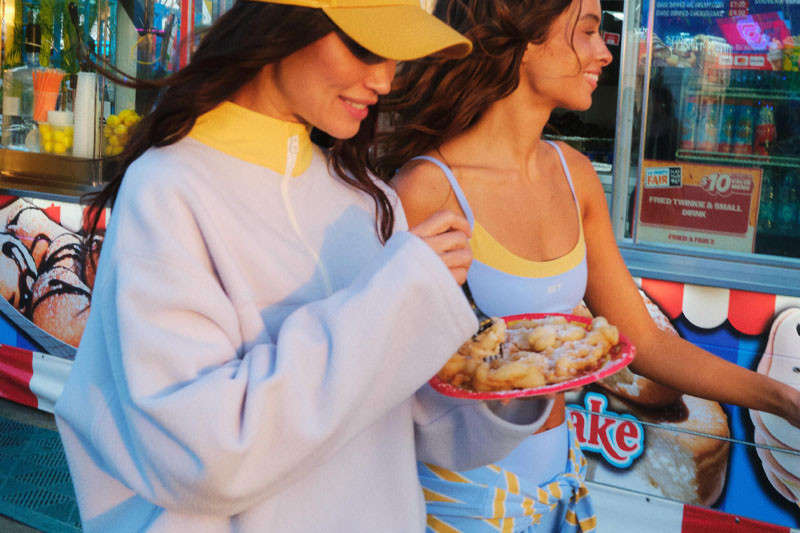
Key Takeaways for Activewear Founders:
- The Business Shift: SET ACTIVE moved consumers from buying single items to buying complete matching sets, naturally multiplying their Average Order Value (AOV).
- The Color Matching Hurdle: Getting a nylon bra to perfectly match a cotton hoodie requires independent dye formulas. If a factory skips this, the set will look mismatched in natural sunlight.
- Structural Necessities: Outerwear-style sports bras require 3D pattern grading to avoid flattening the chest, and leggings must eliminate front seams to maintain a clean aesthetic.
If you look at the activewear market in 2026, the brands that are truly thriving aren't the ones shouting about extreme athletic performance. They are the brands that realize activewear has become daily wear. A perfect example of this is SET ACTIVE.
They bypassed the highly competitive performance market and built a massive following by focusing on retro aesthetics, matching color sets, and a highly addictive "Drop" release schedule. For brand owners looking to build a loyal community, their front-end marketing is brilliant. But executing that vision requires a specific type of manufacturing partner. Let’s break down how to actually build a brand like this, from the business model to the factory floor.
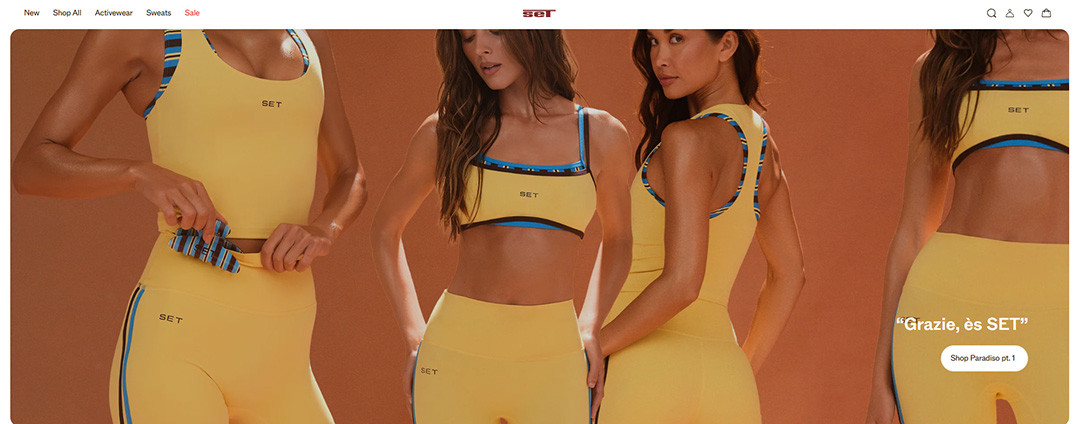
(from:SET ACTIVE)
1. The Commercial Strategy: Forcing the "Matching Set"
Most consumers are used to buying a single pair of black leggings and pairing it with whatever t-shirt they have at home. SET ACTIVE changed that habit. They designed garments that simply look incomplete if you don't buy the matching top.
They achieved this by designing sports bras with square necklines and thicker straps, turning them into stylish crop tops you can wear to a cafe. When the bra looks like actual clothing, and it perfectly matches the color of the biker shorts and the oversized crewneck sweater, the consumer feels compelled to buy the whole outfit. From a business standpoint, this is incredibly smart. It dramatically increases the number of items per order, which helps protect your profit margins against the rising costs of social media advertising.
2. The Hype Machine: Color Drops vs. Seasonal Calendars
Instead of launching massive Spring and Fall collections, SET ACTIVE took a page out of the streetwear playbook. They release limited-edition colorways—like a vivid Retro Red or a soft Butter Yellow—every few weeks.
| Metric | Traditional Retail | The Color Drop Model |
|---|---|---|
| Release Schedule | 2-4 times a year | Every 3-4 weeks |
| Inventory Risk | High (Massive upfront orders) | Low (Frequent, smaller batches) |
| Customer Reaction | Wait for clearance sales | Immediate fear of missing out |
3. The Color Trap: Why Most Factories Fail at Matching Sets
This is where startup brands usually hit a wall. Making a monochromatic set sounds easy until you realize that different fabrics drink dye completely differently.
Your sports bra might be made of nylon and spandex, while your matching sweatpants are made of cotton. Because nylon and cotton require completely different chemical dyes, a lazy factory will just dye them until they look similar under the sewing room lights. But the moment your customer walks outside into the sun, the bra will look slightly red, and the pants will look slightly yellow. It instantly makes the brand look cheap.
To fix this, a proper manufacturer uses a D65 Light Box. This tool simulates natural sunlight, allowing textile engineers to adjust the specific dye formulas for the cotton and the nylon separately, ensuring the colors match perfectly no matter where the customer wears them.
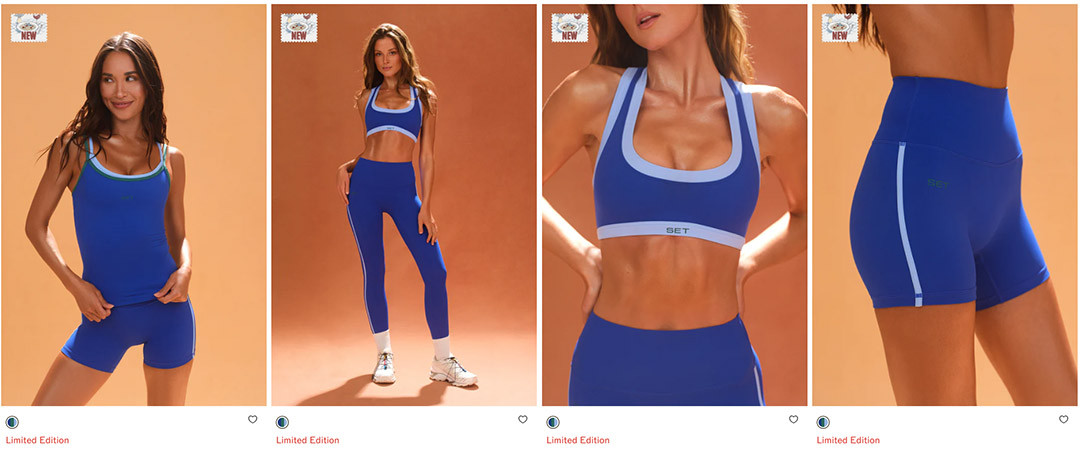
(from:SET ACTIVE)
4. Fabric Engineering: The Secret to the "Sculpted" Feel
SET ACTIVE is famous for fabrics that hold you in without feeling like a medieval corset. You cannot achieve this by simply buying cheap spandex off a market shelf.
Getting that supportive, second-skin feel comes down to how the fabric is knitted. By tightly controlling the gauge (how close the needles are on the knitting machine), a manufacturer can create a fabric that provides high compression for shaping, while brushing the surface to keep it soft to the touch. It is a delicate balance of tension and texture that requires deliberate engineering.

(from:SET ACTIVE)
5. Pattern Making: Designing for the Street, Not Just the Gym
If you want your customers to wear your activewear to lunch, the fit has to be flawless. Traditional sports bras are designed to aggressively flatten the chest to prevent movement during high-impact sports. For a lifestyle brand, that silhouette doesn't work. The pattern needs 3D grading to provide support while maintaining a natural, flattering shape.
The same logic applies to the bottoms. If your brand relies on a clean, aesthetic look, you must exclude front seam designs from your yoga leggings entirely. A front seam creates a high risk of camel toe, which completely ruins the smooth, comfortable aesthetic your customers expect. Re-engineering the crotch gusset to safely remove that front seam is non-negotiable for a modern activewear line.
6. The Final Touch: Private Labeling and Unboxing
If you are using a Drop model, the customer's unboxing experience is the final step in securing their loyalty. Slapping a generic paper tag on a high-end set will break the illusion.
A capable factory handles the entire private label process before the goods ever ship. This means applying seamless silicone heat-transfer logos that won't scratch the skin, using custom-frosted zipper bags, and attaching thick, branded hangtags. The product should arrive at your warehouse ready for retail.
Executing the Vision with the Right Supply Chain
A fast-paced "Color Drop" strategy will completely fall apart if your factory takes three months to develop a single color. It requires a manufacturing partner built specifically for agility.
Operating our design hub and production lines directly in Dongguan, China, allows CallTheSTYLE to source custom yarns and hardware in days. We operate strictly as a B2B source factory focusing solely on bulk manufacturing and OEM/ODM services. We do not engage in B2C retail or dropshipping, which means our entire infrastructure is dedicated to supporting brand owners.
To help brands successfully run a Drop model, we hold a strict Minimum Order Quantity (MOQ) of 100 pieces per style and color. This number is deliberate: it gives you enough inventory to test a new viral colorway without tying up all your capital, while ensuring we have the industrial capacity to immediately scale into thousands of units the moment your product sells out.
Frequently Asked Questions
Why do my matching activewear sets look like two different colors outside?
Different fabrics absorb dye differently. If your manufacturer doesn't use specific dye formulas for each material and check them under standard D65 lighting, the colors will shift and mismatch in natural sunlight.
What is the minimum order quantity (MOQ) to manufacture custom activewear sets?
While older factories often require 1,000 units, our agile production lines require a strict MOQ of 100 pieces per style and color for custom factory orders.
Why should I choose no front seam leggings for my brand?
Excluding front seam designs from your yoga leggings prevents uncomfortable riding up and maintains a much smoother, cleaner aesthetic that modern consumers strongly prefer for daily wear.
Do you have a clear vision for your next activewear collection but need a factory that actually understands color matching, custom fabrics, and the realities of modern brand building?
CONSULT OUR TEAM