From Pantone to Bulk Color: How Custom Activewear Color Matching Works
- Share
- Issue Time
- Sep 14,2026
Summary
A factory-side guide to custom activewear color matching from Pantone or physical references to lab dips and bulk production. Learn how fabric composition, surface finish, lighting, visual review, instrumental measurement, dye-lot variation and approval records affect color—and how brands can control bulk shades without expecting every material to look exactly identical.
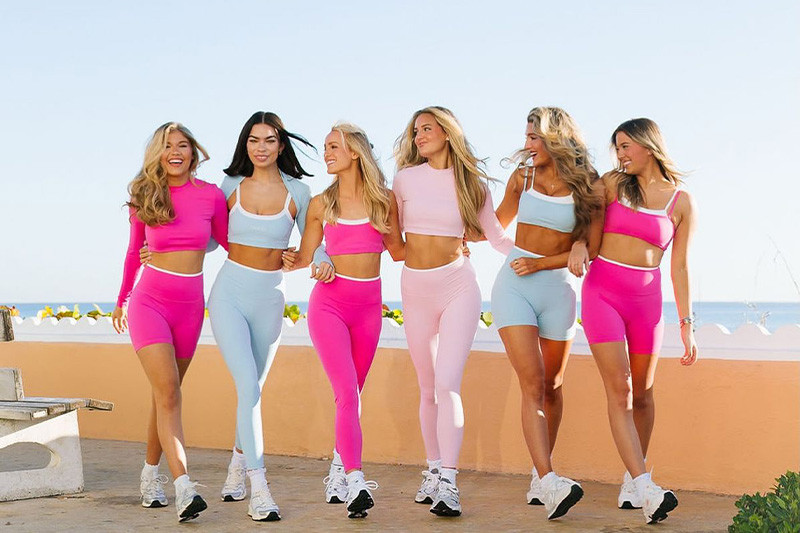
A brand may send a factory a Pantone number and expect the finished activewear to look exactly like the color card. In practice, that Pantone reference is only the beginning of the color-development process.
The same target color can look different when it moves from a cotton color standard onto nylon-spandex, polyester-spandex, rib knit, brushed fabric or a shiny performance surface. That is why bulk color approval should be built around the actual production-intent material, controlled color review and an agreed physical standard.
Custom activewear color matching normally starts with a physical color reference, moves to a lab dip or fabric trial on the intended material, and then uses an approved standard to control bulk production.
Pantone TCX is widely used for textile and apparel color communication, but a Pantone number does not guarantee that nylon, polyester and other textile surfaces will look visually identical to the cotton reference.
Buyers should approve color under agreed viewing conditions, record the approved lab dip or bulk standard, define any instrumental tolerance when required, and manage dye-lot variation during production rather than expecting absolute visual identity across every substrate and batch.
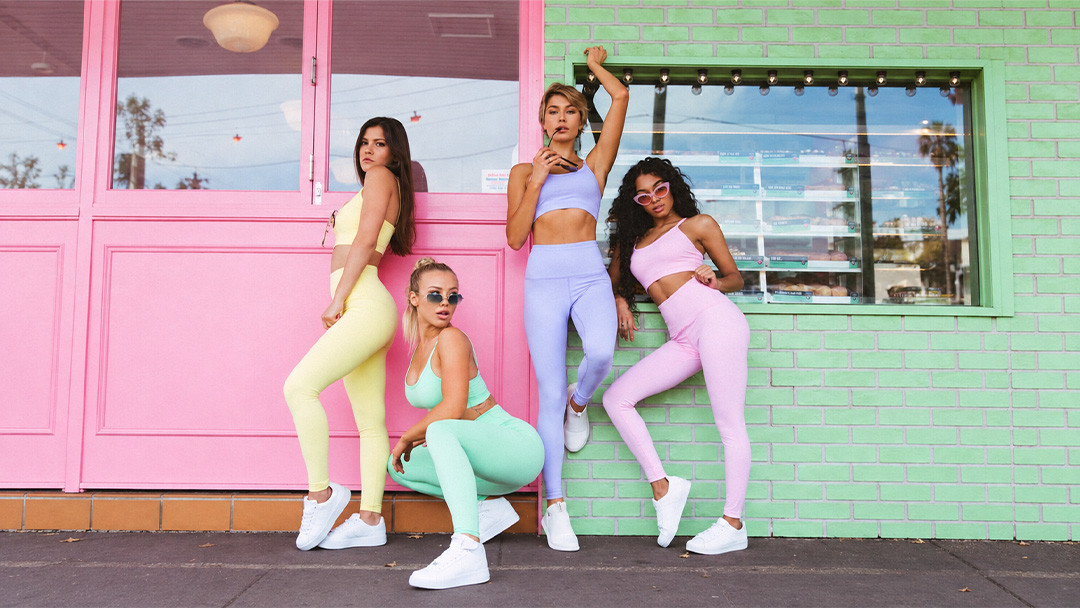
1. How Does Custom Activewear Color Matching Work?
The basic process sounds simple: choose a color, dye the fabric and make the garments.
The real workflow has more control points.
2. Pantone, Physical Swatch or Digital Color: Which Reference Should You Use?
Not every color reference has the same value in textile production.
| Color reference | Useful for | Main limitation |
|---|---|---|
| Pantone TCX physical standard | Consistent textile and apparel color communication | Still needs to be translated onto the actual production substrate |
| Approved fabric swatch | Showing the target on a textile surface | The composition or finish may differ from the new product |
| Existing garment | Useful when reproducing or coordinating an existing collection color | Age, washing, wear and fabric differences can affect appearance |
| HEX / RGB / website image | Early design communication and visual direction | Screen display is not a reliable physical textile approval standard |
| Photo from a phone | Quick discussion and reference | Camera processing, screen calibration and lighting can change appearance |
For textile and apparel projects, Pantone TCX is usually more relevant than Pantone systems designed for hard surfaces.
However, a digital Pantone page on a computer or phone should not be treated as the final visual standard. Screen brightness, calibration and device settings can all change what the user sees.
3. Why Pantone TCX Does Not Guarantee an Identical Fabric Result
Pantone TCX provides a useful standardized target, but the finished garment may use a very different material from the Pantone cotton standard.
Activewear materials may include:
- Nylon-spandex jersey
- Polyester-spandex interlock
- Brushed yoga fabric
- Rib knit
- Seamless engineered knit
- Shiny performance fabric
- Matte compression fabric
Visual appearance can be influenced by:
- Fiber type
- Dye system
- Fabric construction
- Surface texture
- Brushing
- Gloss or matte finish
- Fabric density
- Finishing process
This distinction becomes especially important when a collection uses the same nominal color across several different fabrics.
A sports bra, legging, woven jacket and rib top may all use the same color name while still requiring separate color-development work.

4. What Is a Lab Dip?
A lab dip is a small dyed textile sample developed to show how a target color can be reproduced on a particular fabric or material.
Instead of approving a color only from a Pantone reference, the buyer can evaluate the color on a substrate that is much closer to the actual product.
A submission may include several options, for example:
Lab Dip B
Lab Dip C
The buyer may select the closest direction or request another correction.
Differences between submissions may involve:
- Lightness
- Darkness
- Red / green direction
- Yellow / blue direction
- Chroma or saturation
- Overall visual balance
5. How Should a Brand Review and Approve a Lab Dip?
A good approval process should be repeatable.
Avoid reviewing one submission in bright daylight and the next one under a warm office lamp without recording the difference.
Confirm the Correct Substrate
Before comparing the color, confirm that the lab dip is made on the agreed production-intent fabric or an approved equivalent.
Record:
- Fabric code
- Composition
- GSM
- Construction
- Finish
- Color reference
- Lab-dip revision
Compare Under Agreed Viewing Conditions
Evaluate the standard and submission together using the buyer's agreed color-review procedure.
AATCC EP9 provides a standardized framework for visually comparing the color difference between textile specimens and a standard.
Record the Decision
Avoid informal approval such as:
A more useful record is:
Fabric Code: XXXXX
Color: XXXXX
Reference: Pantone XX-XXXX TCX / approved physical standard
Submission: Lab Dip B
Status: Approved
Approval Date: XXXXX
Approver: XXXXX
If the approved color is later revised, record the new revision rather than silently replacing the original standard.
6. Why Lighting Changes Color Evaluation
One of the most confusing situations for a buyer is when a fabric looks correct in one place and noticeably different somewhere else.
That does not automatically mean someone made a mistake.
Perceived color changes with the light source because different sources have different spectral characteristics.
Two samples may appear close under one condition and separate more clearly under another.
If the buyer has a specific light-box procedure or named illuminants in its quality manual, those requirements should be followed.
If no procedure exists, the buyer and supplier should agree on relevant viewing conditions before final color approval.
7. Visual Approval vs Instrumental Color Measurement
Color can be evaluated visually, instrumentally or by using both approaches together.
Visual Evaluation
A trained reviewer compares the sample directly with the physical standard under controlled conditions.
Visual review can capture things that numbers alone may not fully communicate, particularly when texture, gloss and fabric structure affect appearance.
Instrumental Evaluation
A spectrophotometer measures reflected color information from the textile and produces numerical color data.
AATCC EP6 provides procedures supporting instrumental measurement of textile color.
Instrumental measurement is particularly useful when:
- Multiple production lots must be compared
- The buyer has numerical color tolerances
- Repeat orders need consistent control
- Supplier and buyer need objective supporting data
8. What Does Delta E Mean?
Delta E is a numerical expression of color difference between two measured samples or between a sample and a standard.
The general idea is simple:
Larger measured difference = greater color difference
ISO 105-J03 provides a method for calculating color difference between two specimens of the same material measured under the same conditions using the CMC color-difference approach.
But there is a critical point for buyers:
The acceptable tolerance should reflect:
- Buyer requirements
- End use
- Color sensitivity
- Material
- Product category
- Measurement setup
If a customer requires a specific tolerance, record the exact formula, measurement conditions and pass criteria instead of simply writing:
without explaining which color-difference formula or measurement procedure is being used.
9. From Approved Lab Dip to Bulk Dyeing
Once the color is approved, the next challenge is scaling a small laboratory development into a production dye lot.
Bulk processing introduces additional variables such as:
- Larger material quantity
- Actual production machinery
- Fabric lot
- Dye-bath control
- Temperature and process control
- Finishing
- Heat setting
- Drying
That is why the approved lab dip should not simply disappear from the process after bulk production starts.
Representative bulk material should be compared against the agreed approval standard before the entire garment order proceeds.

10. What Is Dye-Lot Variation?
A dye lot is a batch of material processed together under a particular dyeing run.
When the same color is produced in separate dye lots, small shade differences may occur.
Potential contributors include:
- Raw material variation
- Fiber or yarn lot
- Dye-bath conditions
- Process variation
- Finishing
- Heat setting
- Fabric construction
This does not mean bulk production should accept uncontrolled color variation.
It means the buyer and manufacturer should define how production lots are evaluated and what happens when a lot falls outside the agreed tolerance.
Avoid Mixing Shade Lots Inside One Garment
Where visually relevant, components or panels used within the same garment should be managed carefully so obvious shade differences do not appear between adjacent areas.
This becomes particularly important for:
- Large solid-color panels
- Matching sports-bra and legging sets
- Waistbands
- Gussets
- Self-fabric trims
- Replacement production lots
11. Why the Same Color Can Look Different on Nylon and Polyester
Brands often want one collection color across several product categories.
For example:
Training Top — Polyester / Elastane
Jacket — Polyester Woven
Rib Top — Different knit construction
Even if all products share the same color name or Pantone target, the surfaces may not look perfectly identical.
Differences can come from:
- Fiber chemistry
- Dye system
- Yarn shape
- Fabric structure
- Surface texture
- Brushing
- Gloss
- Light reflection
If cross-fabric color coordination is commercially important, develop and review the fabrics together rather than approving each one in isolation.
12. Color Matching and Colorfastness Are Not the Same Test
Another common mistake is to assume that an approved lab dip also proves the color will remain stable during wear and washing.
It does not.
| Question | Color matching | Colorfastness |
|---|---|---|
| What is being evaluated? | How closely the production color matches the approved standard | How color behaves under specific exposure or use conditions |
| Typical concerns | Hue, lightness, chroma and overall shade | Washing, rubbing, perspiration, light or other relevant conditions |
| Does lab-dip approval prove it? | It can establish the approved color direction | No; relevant colorfastness testing is separate |
The correct colorfastness tests should be chosen according to the product, buyer requirements and end use.
13. Common Activewear Color-Development Mistakes
| Mistake | Why it creates risk | Better approach |
|---|---|---|
| Approving from a phone screenshot | Display and camera settings alter appearance. | Use an agreed physical color reference. |
| Assuming Pantone means exact final color | The target must still be translated onto the production substrate. | Approve the actual fabric development. |
| Approving color under random lighting | Samples can look different under different light sources. | Use agreed controlled viewing conditions. |
| Changing fabric after lab-dip approval | Composition, construction and finish can change color appearance. | Reconfirm color when the substrate changes materially. |
| Using one universal Delta E pass value | Different buyers and end uses can require different tolerances. | Define the actual customer tolerance and formula. |
| Assuming one dye lot proves every repeat order | Future material and processing conditions may differ. | Retain standards and review new production lots as required. |
| Confusing color matching with colorfastness | A correct shade can still perform poorly during wash or rubbing. | Treat shade approval and colorfastness as separate controls. |
14. What Should Be Recorded Before Bulk Production?
| Record field | What to document |
|---|---|
| Style / collection | Relevant product or collection reference |
| Color name | Brand-approved commercial color name |
| Master reference | Pantone TCX / approved fabric / other physical standard |
| Fabric code | Production-intent material |
| Composition | Actual fiber composition |
| GSM / construction | Approved material specification |
| Lab-dip revision | A / B / C or supplier revision reference |
| Approval status | Approved / Revise / Rejected |
| Viewing conditions | Agreed buyer / supplier procedure |
| Instrumental tolerance | Actual requirement if applicable |
| Bulk lot reference | Production lot / dye-lot identification |
| Approval date | Recorded final decision date |
15. Pre-Bulk Color Approval Checklist
Color Reference
- Physical master standard confirmed
- Pantone system and code recorded where applicable
- Digital screenshot is not being used as the only approval reference
Fabric
- Production-intent fabric code confirmed
- Composition confirmed
- Construction and GSM confirmed
- Finish confirmed
Lab Dip
- Correct fabric used
- Submission revision identified
- Physical standard and sample reviewed together
- Viewing conditions controlled
- Instrumental data reviewed where required
- Final approval recorded
Bulk
- Bulk shade checked against agreed standard
- Dye-lot reference recorded
- Applicable tolerance checked
- Different lots controlled where relevant
- Matching components reviewed together
Production
- Approved color standard retained
- Relevant bulk swatch retained
- Buyer approval traceable
- Repeat-order color reference available
Frequently Asked Questions
Can an activewear manufacturer match any Pantone color?
A Pantone reference can be used as a target for color development, but the final result depends on the actual fiber, fabric construction, dye system and finish. The color should be developed and approved on the intended material rather than treated as an automatic exact reproduction.
Should activewear brands use Pantone TCX or TPG?
Pantone positions TCX for textiles and apparel and TPG mainly for hard surfaces and coatings. For an activewear textile project, a physical TCX reference is therefore usually the more relevant starting point.
What is a lab dip in apparel manufacturing?
A lab dip is a small dyed textile sample developed so the buyer can review how a target color translates onto a specific fabric before bulk dyeing.
Why does my lab dip look different from the Pantone card?
The Pantone TCX reference and your activewear fabric may use different fibers, surfaces and finishes. These differences can change how light interacts with the material, which is why the actual fabric submission needs to be visually reviewed and approved.
How many lab-dip rounds are normal?
There is no universal number. Some colors can be approved on the first submission, while others require additional corrections. The number of rounds depends on the target shade, substrate, dye system, buyer tolerance and how close each submission is to the agreed reference.
What is Delta E in textile color matching?
Delta E is a numerical expression of measured color difference between a standard and sample. The calculation method and acceptable tolerance should be defined by the buyer or applicable specification rather than assuming one universal pass number.
Can bulk activewear color differ from the approved lab dip?
Bulk production can show some process variation, which is why representative bulk material should be checked against the agreed approved standard and applicable tolerance before or during production.
Why does the same Pantone color look different on nylon and polyester?
Different fibers use different dye systems and can also have different yarn structures, knit surfaces and finishes. As a result, two materials developed toward the same color target may not appear perfectly identical. Cross-fabric coordination should be reviewed on the actual materials.
Should every dye lot be checked?
The required inspection plan depends on the buyer's color-control procedure and production setup. When lot-to-lot consistency is commercially important, dye-lot identification and representative shade checks should be part of the production record.
Final Recommendation
Good color development starts with a clear reference, but it does not end with a Pantone number.
Confirm the actual fabric. Develop the color on that substrate. Review the physical lab dip under agreed conditions. Record the approved standard. Then compare bulk production against that approval instead of relying on memory, screenshots or informal comments.
If numerical color control is required, agree on the measurement method and tolerance before bulk production begins.
And when a collection uses different materials, review those materials together rather than assuming one Pantone target will appear visually identical on every surface.
That is a much more realistic—and much more useful—way to manage custom activewear color.
Developing Custom Colors for Your Activewear Collection?
Send us your physical color reference or Pantone code together with the product, fabric requirement, colorways, size range and planned quantity. Our development team can review the material and color-development requirements before sampling and bulk production.
Discuss Your Color DevelopmentTechnical References
- Pantone Fashion, Home + Interiors — guidance on TCX for textiles and apparel and TPG for hard surfaces.
- Pantone Cotton Swatch Card — physical Fashion, Home + Interiors TCX cotton color standard for apparel and textile development.
- AATCC EP9-2025 — Evaluation Procedure for Visual Assessment of Color Difference of Textiles.
- AATCC EP6-2021 — Evaluation Procedure for Instrumental Color Measurement.
- ISO 105-J03:2009 — Textiles — Tests for colour fastness — Part J03: Calculation of colour differences. Confirmed current in 2025.