Top 10 Activewear Quality Control Checkpoints: Why Bulk Differs From Samples
- Share
- Issue Time
- Jun 1,2026
Summary
Terrified of receiving bulk activewear that looks nothing like your golden sample? This 10-point quality control guide exposes why bulk production fails and how professional factories prevent it. Learn our strict QC protocols, from 24-hour fabric relaxation and D65 light box color matching to First Article Inspection (FAI) and mandatory metal detection.
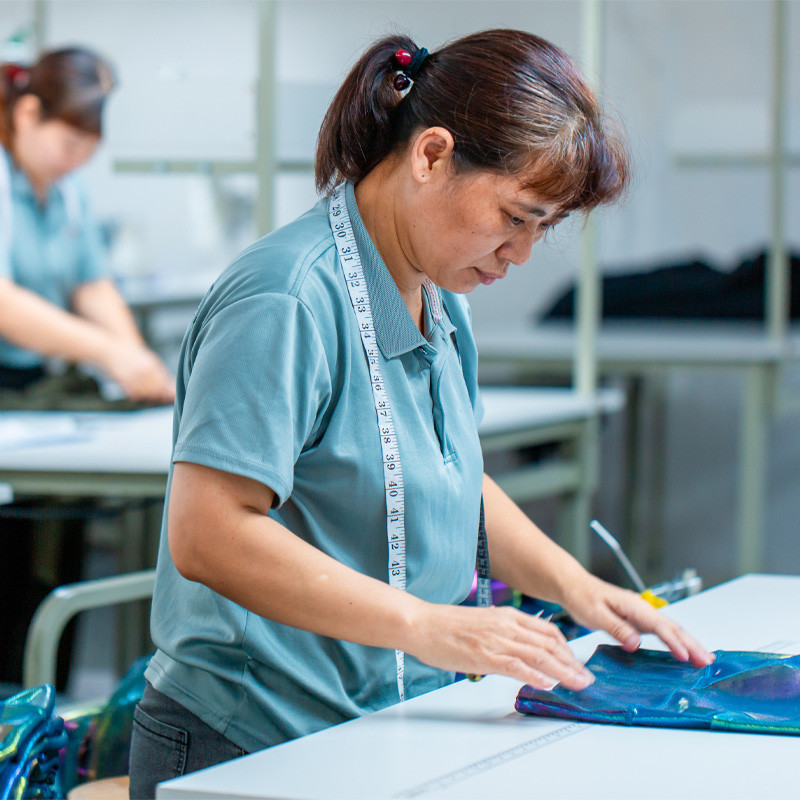
Hand-crafting a single pair of leggings in a sample room is relatively simple. However, running thousands of yards of high-stretch elastane blends through heavy industrial sewing machinery introduces hundreds of variables. If a factory relies entirely on workers visually checking garments at the very end of the line, it is already too late.
Top-tier manufacturing treats Quality Control (QC) as an active, continuous engineering process. Before you trust a supplier with your bulk order, verify that they implement these 10 non-negotiable inspection checkpoints.
| The Common Nightmare | Why Cheap Factories Fail | Premium Factory Standard |
|---|---|---|
| Drastic Shrinkage | Cutting fabric while it is stretched tightly on the roll. | Mandatory 24-48 Hour Relaxation tables to let elastane fibers normalize. |
| See-Through Fabric | Secretly swapping for a cheaper, thinner material. | Verifying ±3% GSM tolerance using digital scales and circular cutters upon arrival. |
| Mismatched Colors | Checking dye lots under standard fluorescent warehouse lights. | Evaluating under both D65 (Daylight) and TL84 (Retail) bulbs to prevent metamerism. |
| Popped Seams | Incorrect sewing machine thread tension for speed. | Physical Tensile Pull Testing on flatlock seams directly on the assembly line. |
| Needles Left in Clothing | Ignoring broken needles to save production downtime. | 1.2mm Ferrous Metal Calibration on a 100% conveyor detection system. |
Table: Bulk Production Discrepancies & Industrial Solutions
1. Fabric Relaxation: The Invisible Shrinkage Factor
When high-spandex activewear fabrics are wound onto cardboard tubes at the mill, they are under massive mechanical tension. If a factory unrolls that fabric and cuts it immediately, the cut pieces will eventually snap back to their natural state. This means your carefully graded Size Large will physically shrink into a Size Medium before it even hits the washing machine.
What to Demand: Build time into the production schedule. All elastane blends must undergo a 24 to 48-hour relaxation period. The fabric should be unrolled onto long cutting tables and left undisturbed. This allows the fibers to fully contract to their true resting state, ensuring dimensional stability.
2. GSM Audits: Catching the Fabric Swap
One of the oldest tricks in the garment industry is the fabric swap. You approve a heavy, squat-proof 250 GSM (Grams per Square Meter) fabric. But during bulk production, a dishonest factory quietly buys a 220 GSM version to increase their margin. The result? Your leggings are suddenly sheer.
What to Demand: Never rely on touch. When bulk fabric arrives at the loading dock, the QC team must use an industrial circular cutter to punch out a precise 100cm² swatch. This is weighed on a highly sensitive digital scale. If the weight does not fall within a strict ±3% tolerance of your approved Golden Sample, the entire shipment must be rejected back to the mill.
3. Eliminating Metamerism (The Two-Tone Effect)
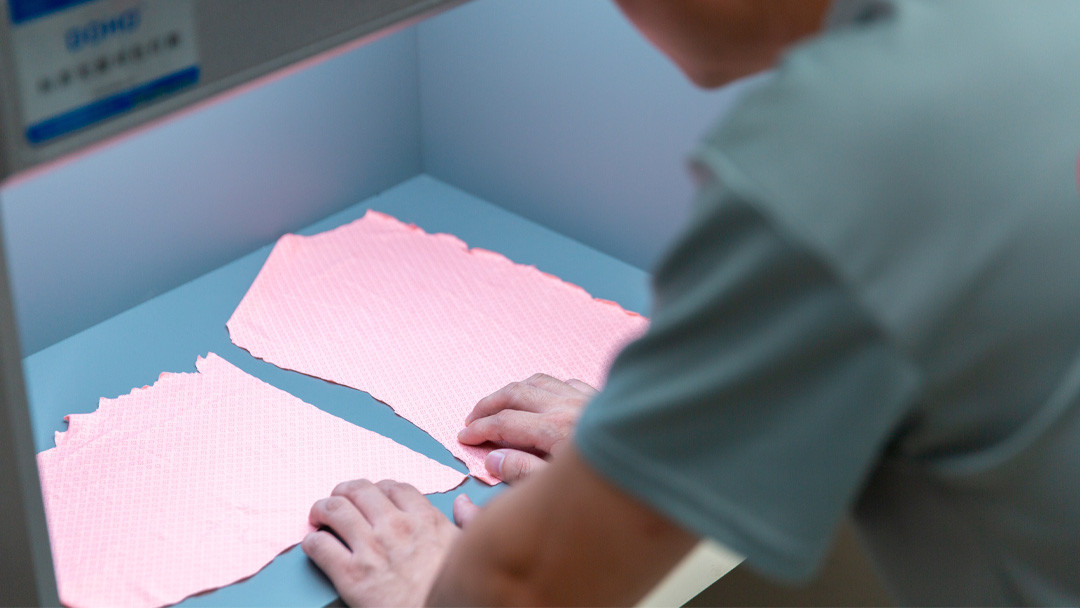
Have you ever looked at a sports bra and legging set that matched perfectly indoors, but outside in the sun, the top looked purple while the bottoms looked navy blue? That is called metamerism, and it happens when factories approve dye batches under cheap, inconsistent ceiling lights.
What to Demand: Color approval must be strictly controlled. Fabric swatches should be placed inside a professional Color Assessment Cabinet and evaluated under D65 bulbs (mimicking natural daylight) and TL84 bulbs (mimicking standard retail store lighting). If the top and bottom fabrics don't match under both settings, production halts.
4. First Article Inspection (FAI)
Most bulk defects happen because an operator misunderstood a tech pack early on. If nobody checks the garments until packing, you end up with thousands of unsellable units.
What to Demand: Enforce a First Article Inspection. When the sewing floor starts a new style, the very first completed garment must be pulled off the line. The production manager and head QC must compare it stitch-by-stitch and inch-by-inch against the approved sample. The entire assembly line should effectively pause until this "first article" gets a formal signature of approval.
5. Tensile Strength: The Stitch "Pull Test"
Activewear takes a beating. A seam can look perfectly straight and clean on a hanger, but if the sewing machine tension was set too tight (often done to increase sewing speed), the thread will snap the moment a customer drops into a deep squat.
What to Demand: Physical abuse testing on the floor. In-line inspectors should randomly grab garments and aggressively stretch the 4-needle 6-thread flatlock seams to their absolute maximum lateral limit. If a single thread "pops," the machines must be immediately recalibrated.
6. Crocking Standards (Preventing Dye Transfer)
If your customer sweats in your new red sports bra and takes it off to find their white t-shirt dyed pink, your brand's reputation is instantly damaged.
What to Demand: Strict adherence to the AATCC 8 test method for colorfastness to crocking. Before bulk cutting begins, a mechanical crockmeter is used to vigorously rub both a wet and dry piece of white cotton cloth against the dyed activewear fabric. Require a minimum of Grade 4 on the grayscale rating. Anything lower means the dye is unstable.
7. Asymmetry and Rigid Tolerances
Twisted bra straps and uneven pant legs are the fastest way to trigger high return rates. Fabric feeds unevenly through sewing machines if operators aren't careful.
What to Demand: During final inspection, garments must be laid flat and folded directly down the center axis to visually check for absolute symmetry. Key points of measurement (POMs) must be verified. For high-stretch knits, professional factories strictly enforce a ±0.5 inch (1.27 cm) tolerance on critical areas like waistbands and inseams.
8. Hardware Force Testing
Active jackets and pullovers rely on zippers, bungee cords, and snaps. If a hem toggle tears out of the fabric after two uses, the garment is fundamentally broken.
What to Demand: The use of digital force gauges. Snaps and buttons must withstand a minimum pull force of 90 Newtons for 10 seconds without detaching or tearing the underlying fabric. Zippers must undergo rapid cycle testing to ensure the slider teeth don't misalign under pressure.
9. Inside-Out Finishing (The Chafing Check)
A sloppy manufacturer only cares about shelf appeal. A premium manufacturer knows that the inside of an athletic garment dictates the customer's review. Scratchy threads and bulky seams cause severe chafing during workouts.
What to Demand: The final finishing team must turn every garment inside out. Excess thread tails should be trimmed to less than 1/4 inch. Intersections of flatlock seams (like the crotch gusset) must lay flat against the skin, and all care labels should be cleanly printed or sewn with soft-edge tape.
10. Consumer Safety: The 1.2mm Metal Standard
Sewing needles break frequently when passing through thick seams. If a tiny, sharp piece of a broken needle gets trapped inside a sports bra and injures a customer, your brand is liable for severe damages.
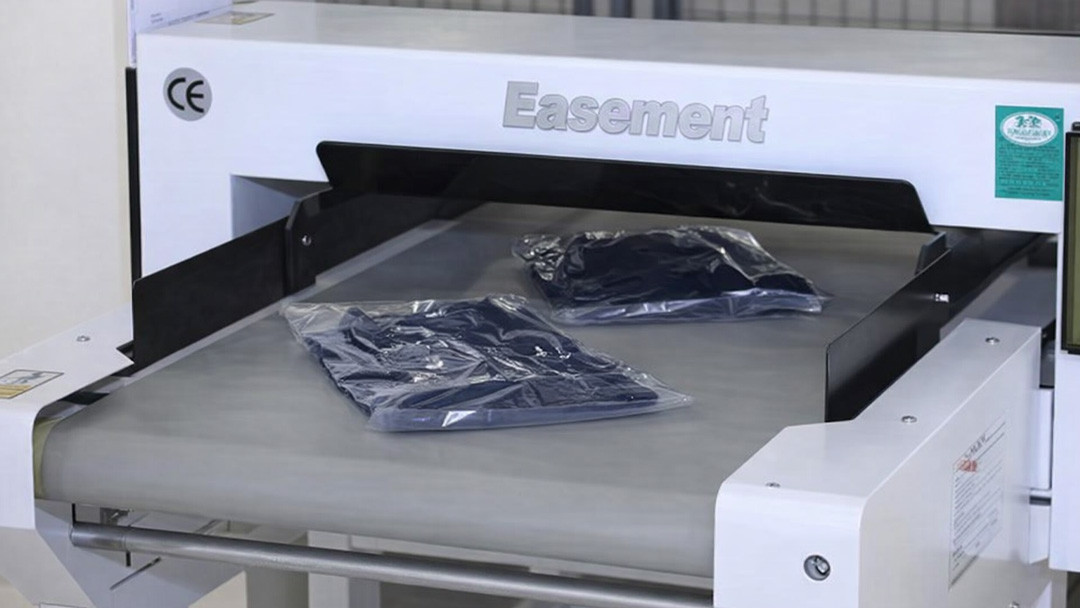
What to Demand: First, a strict 1-for-1 broken needle log on the factory floor; an operator must present all pieces of a broken needle to get a replacement. Second, 100% of finished, polybagged garments must pass through a conveyor-belt metal detector calibrated to identify a 1.2mm ferrous metal fragment before hitting the shipping carton.
Protect Your Brand Reputation
Stop crossing your fingers and hoping the bulk matches the sample. At Call The Style, we strictly execute every single QC protocol listed above. Partner with us for data-driven, fully transparent quality control that protects your investment.
START YOUR PRODUCTIONFrequently Asked Questions
Q: Why did my leggings shrink so much after the first wash?
A: The factory likely skipped the relaxation phase. If elastane fabric is cut straight off the roll while under mechanical tension, it will snap back to its normal, smaller size later. Professional factories relax all fabric for 24-48 hours before cutting.
Q: How do I ensure the bulk fabric isn't thinner than what I approved?
A: Require your factory to cut precision swatches and use digital scales to test the GSM (grams per square meter) of all incoming bulk fabric. If it falls outside a strict ±3% tolerance of your Golden Sample, it should be rejected.
Q: Why do my matching sets look like two different colors in the sunlight?
A: This is metamerism. It happens when factories use cheap ceiling lights to check dye batches. Fabrics must be tested inside a Light Box using D65 (daylight) and TL84 bulbs to ensure they match perfectly under any lighting condition.
Q: What happens if a sewing needle breaks inside my product?
A: To prevent this, factories must operate a strict needle replacement log. As a final fail-safe, every finished garment should pass through an industrial conveyor metal detector calibrated to find 1.2mm ferrous fragments before shipping.