Top 10 Criteria for Choosing a Reliable Golf & Tennis Polo Manufacturer
- Share
- Issue Time
- May 15,2026
Summary
Stop accepting golf and tennis polos with curling collars and wavy plackets. This 10-point guide helps athleisure brands audit polo shirt manufacturers. Learn the factory standards for inserting collar stays, fusing plackets, and engineering side vents to build premium, functional performance polos for the course and the court.

Golf and country club apparel has shifted from heavy, stiff cotton to high-stretch, synthetic performance blends. Athletes expect these polos to wick sweat and allow for full swing mobility, while still maintaining a sharp, structured appearance for the clubhouse.
You need a factory that understands structural tailoring on knit fabrics. At Call The Style, we rely on exact fusing temperatures, mechanical stretch engineering, and specific trim sourcing. Ask your potential supplier these 10 practical questions to verify their capability.
1. The Collar: Preventing the "Bacon Curl"
The Common Problem: Floppy, Curling Collar Points
The fastest way to ruin a polo shirt is a collar that curls up at the points or flops down unevenly after washing. This happens when factories use a single layer of soft self-fabric or a cheap rib-knit with no internal support.
The Factory Solution: Fusing and Built-In Collar Stays
We approach the collar like a dress shirt. We apply a layer of specific knit Fusible Interlining inside the collar leaf. For structured designs, we insert flexible plastic Collar Stays into hidden pockets under the collar points. This forces the points to lay flat against the collarbone permanently, even after machine washing.
2. The Placket: Stopping the Wave
The Common Problem: Wrinkled Button Areas
The placket is the vertical slit containing the buttons and buttonholes. If a sewing operator just folds the stretchy body fabric over and sews it, the placket will buckle, ripple, and look wavy down the chest.
The Factory Solution: Double-Sided Stabilization
We kill the stretch exactly where the buttons sit. We iron a firm strip of interfacing onto both the upper (buttonhole) and lower (button) placket pieces before assembly. This gives the fabric enough rigidity to handle the tension of the button stitching without puckering.
3. Swing Mobility: The Shoulder Construction
The Common Problem: Fabric Pulling During a Drive
Standard t-shirt shoulder seams sit directly on top of the shoulder bone. When a golfer takes a full swing, this rigid seam digs into the skin, and the entire shirt pulls out of their pants.
The Factory Solution: Forward-Rolled Seams or Raglan Cuts
We change the geometry of the shoulder. We use a Forward-Rolled Shoulder Seam, moving the stitching 1 to 2 inches toward the chest so it doesn't sit on the hinge point of the shoulder. For maximum mobility, we switch the pattern entirely to a Raglan Sleeve, eliminating the top shoulder seam altogether to allow unrestricted arm rotation.
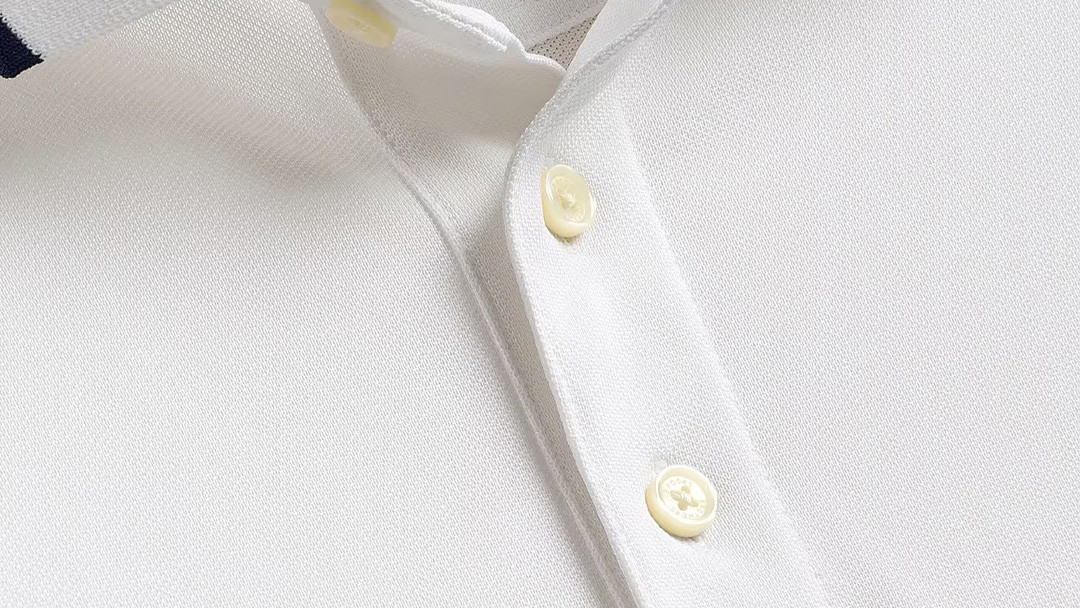
4. Button Security: Cross-Stitching
The Common Problem: Buttons Falling Off
Polo shirts take a lot of physical abuse. A standard parallel lockstitch on a button will unravel quickly if a loose thread is pulled, causing the button to fall off mid-game.
The Factory Solution: X-Stitching and Shank Wrapping
We program our button-sewing machines to execute an X-Stitch (Cross-Stitch) for maximum hold. For high-performance lines, we use an Ascolite thread-wrapping machine that tightly winds a thermo-fusible thread around the base of the button, heat-sealing it so it is physically impossible to fall off.
5. Side Vents: The "Tennis Tail" Reinforcement
The Common Problem: Ripped Side Hems
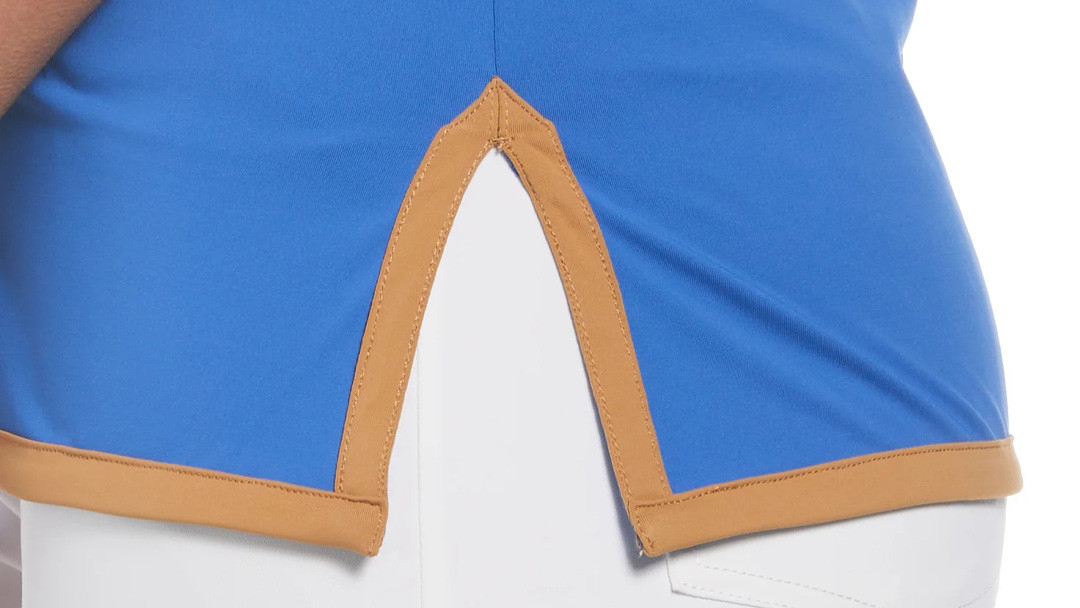
Most performance polos feature a "drop tail" (the back is longer than the front) with slits on the sides so the shirt sits flat over the hips. The top of that slit takes all the tension when the athlete bends over, often tearing the side seam.
The Factory Solution: Twill Tape and Bar-Tacking
We reinforce the apex of the slit. We sew a vertical Bar-Tack directly at the top of the side vent. To finish the inside cleanly and add structural strength, we bind the interior edges of the slit with a non-stretch woven twill tape.
6. Managing Fabric Torquing (Side Seam Twist)
The Common Problem: Twisted Shirts After Washing
Pique knits and jersey fabrics have a natural tendency to twist. Have you ever washed a shirt and found the left side seam has twisted around to the front of your stomach? This is called "torquing."
The Factory Solution: Spirality Control
We measure and control fabric spirality. We specify the yarn twist direction (Z-twist vs. S-twist) at the knitting stage. During dyeing and finishing, the fabric is run through a compactor to stabilize the grainline, ensuring the side seams remain perfectly straight down the torso.
7. Sweat Management: True Moisture Wicking
The Common Problem: Wet Patches
A heavy cotton polo absorbs sweat and holds it, leaving large, dark wet patches on the back and underarms, making the shirt heavy and uncomfortable.
The Factory Solution: Hydrophilic Capillary Action
We don't just use standard polyester. We select micro-polyester yarns engineered with specific cross-sections, and apply a Hydrophilic (water-loving) Finish to the inside of the fabric. This acts like a capillary system, instantly pulling sweat off the skin, spreading it wide across the outer surface so it evaporates rapidly.
8. Shoulder Stretching on Hangers
The Common Problem: Pointy Shoulders
High-stretch performance fabrics are heavy. When a polo is hung on a store rack or in a closet, gravity pulls the fabric down, causing the shoulder seams to stretch out and form permanent "hanger bumps."
The Factory Solution: Mobilon Tape Insertion
We structurally lock the shoulder width. During the sewing of the top shoulder seam, the operator feeds a strip of Clear Elastic Tape (Mobilon tape) into the overlock stitching. This invisible tape acts as a physical barrier, stopping the shoulder seam from stretching past its engineered length.
9. Anti-Pilling for Golf Bags
The Common Problem: Fuzz on the Shoulders
Golfers carry heavy bags with abrasive straps. If the polo is made with short-staple fibers or a loose knit, the friction from the strap will immediately cause the fabric on the shoulder to pill (form small balls of fuzz).
The Factory Solution: High-Gauge Knitting and Enzymes
We specify abrasion resistance. We use a high-gauge (tightly knit) construction, and run the fabric through an enzyme bio-wash. This process essentially "shaves" off the microscopic loose fibers on the fabric surface before cutting, drastically reducing the chance of pilling from strap friction.
10. Neckline Finishing: Eliminating Scratchy Tags
The Common Problem: Neck Irritation
A woven brand label sewn into the back of the neck is the fastest way to annoy an athlete. Additionally, an exposed overlock seam at the back of the neck looks messy and rubs the skin.
The Factory Solution: Heat Transfers and Self-Fabric Taping
We keep the interior clean. We replace woven tags with flat Silicone Heat Transfers. To cover the raw seam connecting the collar to the body, we sew a strip of self-fabric binding (Back Neck Tape) across the entire back neckline, ensuring nothing scratches the wearer's skin.
Manufacture Sharp, Functional Polos
Stop dealing with curling collars, wavy plackets, and poor fit. Partner with Call The Style for precision-engineered performance polos built for the course and the clubhouse.
START YOUR PROJECTFrequently Asked Questions (FAQ)
Q: Why does the collar on my polo shirt curl up after washing?
A: This happens when the collar lacks internal structure. We fix this by ironing fusible interlining inside the collar leaf and inserting plastic collar stays to force the points to lay flat permanently.
Q: Why does the button area (placket) look wrinkled and wavy?
A: Stretchy fabric buckles under the tension of buttonhole stitching. We apply a stiff layer of interfacing to both sides of the placket before sewing to kill the stretch and keep it perfectly flat.
Q: How do you prevent the shoulder seams from stretching out on a hanger?
A: Heavy knit fabrics drag down on hangers. We sew a thin strip of clear elastic (Mobilon tape) inside the shoulder seam. This acts as a physical lock, stopping the shoulder width from stretching.
Q: How do you stop the side slits on the hem from ripping?
A: The top of the side slit takes a lot of tension. We reinforce this exact point by sewing a dense bar-tack stitch and binding the inside edges with non-stretch twill tape for structural strength.