Top 10 Criteria for Choosing a Reliable Plus-Size Activewear Manufacturer
- Share
- Issue Time
- May 22,2026
Summary
Stop scaling up a Size Small and hoping it fits a 3XL. This practical 10-point guide helps inclusive activewear brands audit manufacturers. Learn the factory standards for non-linear pattern grading, preventing waistband rolling with power mesh, stopping inner thigh chafing, and adjusting fabric weight to solve the sheer squat-test problem on curvy bodies.
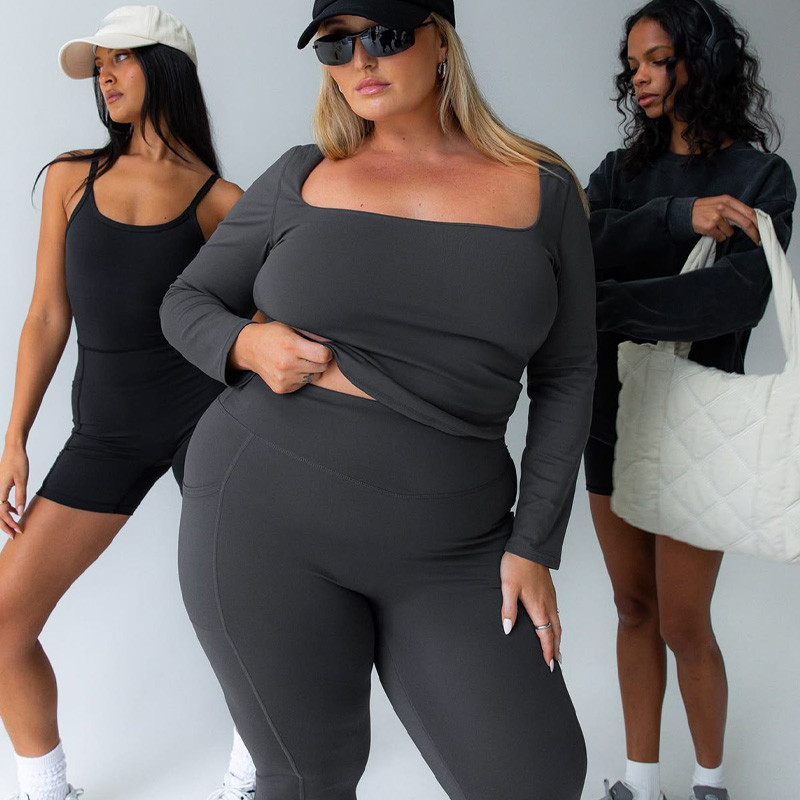
Inclusive sizing is mandatory for modern activewear brands. Customers wearing XL to 4XL expect the exact same performance, compression, and durability as standard sizes. However, building these garments requires a completely different approach in the pattern room and on the sewing floor.
You need a factory that engineers clothing based on physics and real-world tension. At Call The Style, we rely on non-linear grading, reinforced structural panels, and specific thread choices. Ask your potential supplier these 10 practical questions to verify their capability in manufacturing plus-size activewear.
1. Pattern Grading: The Linear Scaling Mistake
The Common Problem: Giant Necklines and Armholes
If a factory uses basic linear grading to scale a Size S up to a 3XL, the width and length increase equally everywhere. The result is a sports bra with an armhole that hangs down to the ribs, and a neckline that exposes the entire chest when bending over.
The Factory Solution: Non-Linear Grading
We apply Non-Linear Grading rules in our CAD system. As the body circumference increases, the vertical measurements (like neck drop and armhole depth) do not increase at the same drastic rate. We adjust the pitch and the center of gravity on the pattern specifically for heavier chest and hip measurements to ensure the garment stays anchored.
2. Waistband Rolling: The Fold-Over Effect
The Common Problem: The Belly Fold
A standard double-layer spandex waistband works fine on a flat stomach. But when placed under the downward pressure of a softer, curved abdomen, the waistband will instantly fold in half and roll down during a squat, digging painfully into the wearer's skin.
The Factory Solution: Internal Power Mesh
We build a skeleton inside the waistband. We insert a wide panel of high-tension Power Mesh between the front layers of the waistband fabric. This acts as a structural brace. It provides strong abdominal compression and physically prevents the fabric from buckling or rolling down under pressure.
3. Inner Thigh Chafing and Fabric Pilling
The Common Problem: Friction Holes
Curvy bodies naturally experience more skin-to-skin contact between the thighs. A standard yoga pant will develop severe fabric pilling (fuzz balls) in this area after a few walks, and the crotch seam will eventually rub open and create a hole.
The Factory Solution: Anti-Abrasion Blends and Gusset Redesign
We address both the material and the seam structure. First, we recommend high-gauge nylon/spandex blends rather than short-fiber polyester, as nylon withstands friction significantly better. Second, we widen the Crotch Gusset (the diamond-shaped fabric insert) specifically for plus sizes, moving the actual intersecting seams away from the highest friction zones of the inner thigh.
4. Heavy Bust Support (D+ Cups)
The Common Problem: Shoulder Digging
If a factory uses standard 1/2-inch elastic straps on a 3XL sports bra, the entire weight of a heavy bust is concentrated on two narrow points, causing the straps to dig painfully into the shoulders and leave deep red marks.
The Factory Solution: Wide Straps and U-Back Construction
We redistribute the weight. For plus-size tops, we widen the shoulder straps to at least 1.5 inches and often pad them. We also engineer a U-Back or Leotard Back design. This pulls the tension away from the top of the shoulders and distributes the weight down into the thick, high-recovery bottom elastic band.
5. Seam Blowouts Under High Tension
The Common Problem: Popping Stitches
Plus-size garments endure higher lateral stretch forces when the wearer bends or squats. Standard polyester thread sewn on a basic overlock machine will reach its stretch limit and snap.
The Factory Solution: 4-Needle Flatlock and Wooly Nylon
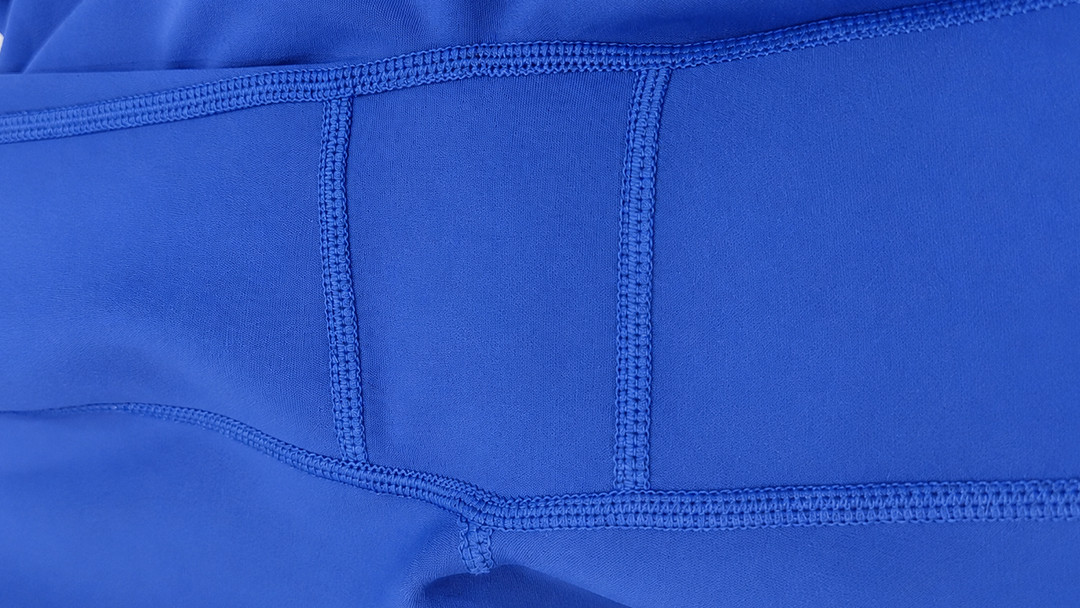
We switch to heavy-duty sewing. All major structural seams are sewn using 4-Needle 6-Thread Flatlock machines threaded with high-stretch Wooly Nylon thread. This construction lays flat against the skin to prevent chafing and stretches to 150% of its length without breaking.
6. Fabric Opacity: The Squat Test Fail
A 220 GSM fabric might be completely opaque on a Size Small. But when that exact same fabric is stretched tightly over the hips of a Size 3XL, the fibers spread apart, making the fabric sheer and exposing the wearer's underwear during a squat. We solve this by adjusting the fabric weight. For plus-size collections, we often scale the fabric up to a denser 280-300 GSM Interlock Knit to guarantee 100% squat-proof opacity across all sizes. (Read more about fabric density in our Yoga Pants Guide.)
7. Hem Riding Up on Tops
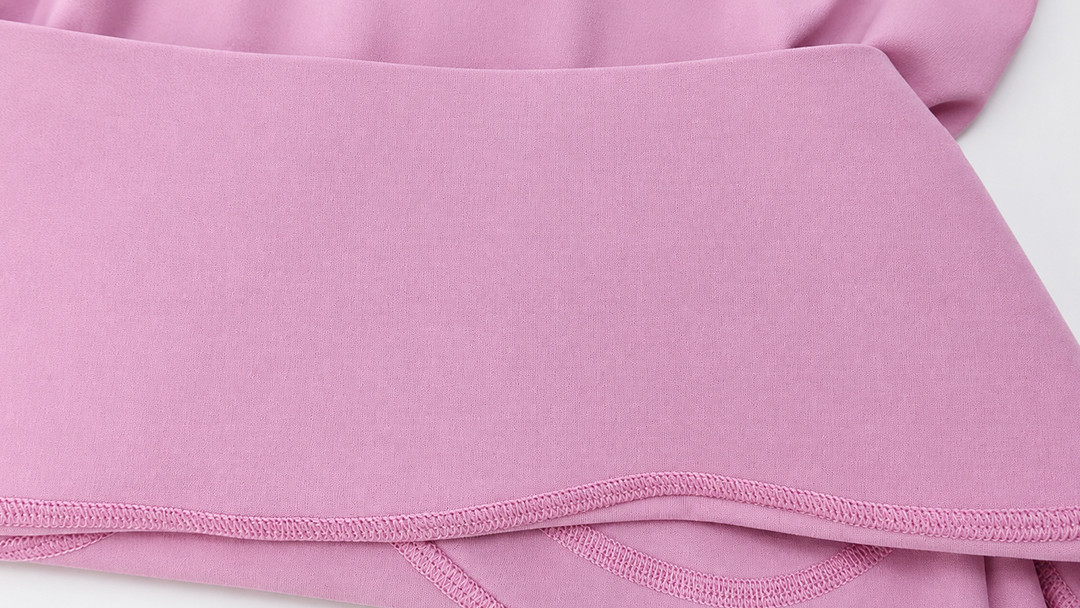
Fitted workout shirts tend to ride up and expose the stomach when a curvy wearer lifts their arms, because the fabric slides up over the chest and gets stuck. To anchor the garment, we adjust the pattern to feature a Drop-Tail Hem (longer in the back and front), and for high-performance gear, we apply a thin strip of silicone grip tape to the inside of the bottom hem to hold it firmly against the hips. (See our assembly techniques in our Quality Control Breakdown.)
8. Hardware Popping Under Pressure
If a plus-size active jacket uses a standard #3 nylon zipper, the lateral tension across the chest and stomach can cause the zipper teeth to burst open from the middle. We specify heavier hardware for larger sizes. We mandate #5 YKK Auto-Lock Zippers and reinforce the fabric behind the zipper tape with fusible interfacing, ensuring the track remains stable and secure under high stretch forces. (Avoid hardware errors with our Tech Pack Mistake Guide.)
9. Managing Heat and Ventilation
Heavier fabrics and compressive fits trap a significant amount of body heat. To prevent the garment from feeling like an oven, we engineer specific ventilation zones. We map the body's highest heat areas (underarms, lower back) and insert highly breathable, durable warp-knit mesh panels to allow for rapid heat escape without compromising the garment's structural integrity. (Learn more in our Eco-Friendly Guide.)
10. Live Fit-Testing on Real Bodies
You cannot check the fit of a 3XL legging by placing it flat on a table or putting it on a rigid plastic mannequin. Real bodies are soft and distribute weight differently. We conduct live fit-testing with models who actually wear plus sizes. We evaluate the garment while the model squats, bends, and stretches, allowing us to adjust the pattern for real-world tension before bulk production begins. (See how this saves money in our Cost Analysis Guide.)
Engineer True Inclusive Activewear
Stop relying on factories that just scale up small patterns. Partner with Call The Style for structurally engineered, non-linear graded activewear built specifically for curvy bodies.
START YOUR PROJECTFrequently Asked Questions (FAQ)
Q: Why does the waistband on plus-size leggings always roll down?
A: Standard fabric waistbands fold under the downward pressure of the abdomen. We solve this by inserting a wide layer of high-tension power mesh inside the waistband to act as a structural brace.
Q: How do you prevent holes from forming on the inner thighs?
A: Inner thigh friction destroys cheap polyester. We use high-gauge nylon blends that resist abrasion, and we widen the crotch gusset to physically move the seams away from the highest friction areas.
Q: Why do plus-size armholes and necklines fit so poorly on cheap activewear?
A: This happens when a factory uses linear grading (scaling up everything equally). We use non-linear grading, calculating the specific centers of gravity for larger bodies so armholes and necklines stay anchored.
Q: Why does my fabric pass the squat test on a Size Small but fail on a 2XL?
A: A 220 GSM fabric becomes sheer when stretched tightly over larger curves because the fibers separate. We often scale the fabric density up to 280-300 GSM for plus-size runs to ensure total opacity.